
Why Japan Arrests Foreigners
Paolo fromTOKYO · 3 HN recommenders
Paolo fromTOKYO explains why foreign tourists get arrested in Japan, covering strict laws and the justice system's very high conviction rate.
THE ARCHIVE · EVERY DISCOVERY
3,553 videos with summaries and linked Hacker News recommendations, arranged by title.
Paolo fromTOKYO · 3 HN recommenders
Paolo fromTOKYO explains why foreign tourists get arrested in Japan, covering strict laws and the justice system's very high conviction rate.

Military History Visualized · 3 HN recommenders
Military History Visualized charts ship production by the United States and Japan from December 1941 to September 1945. The growing numbers show why Japan, despite a stronger starting navy, could not win a long war.

Life Where I'm From · 8 HN recommenders
A video explaining why Japanese cities look the way they do, through Japan's national tiered zoning system that permits mixed use and flexible development. It compares this approach with more restrictive zoning elsewhere.

That Japanese Man Yuta · 3 HN recommenders
Yuta explains what Japan's 99% conviction rate actually means, noting that prosecutors drop cases unless confidence is very high. He argues that the number is widely misunderstood and cites his sources.

Soup Emporium · 4 HN recommenders
A long video essay arguing that Koko the gorilla probably could not actually use sign language. It examines the cherry-picked data and the lack of transparency behind the claims, drawing on published critiques.

Veritasium · 4 HN recommenders
Veritasium explores why time seems to speed up as we age, covering chronoception and several competing explanations beyond the common proportional-theory argument.

UnHerd · 7 HN recommenders
UnHerd interview with Swedish epidemiologist Johan Giesecke, who explains why he thinks lockdowns are the wrong policy and describes Sweden's approach during the spring 2020 pandemic.

Together Louisiana · 6 HN recommenders
Together Louisiana asks why Louisiana stays poor despite its natural resources and industry, focusing on industrial tax exemptions and corporate welfare.

Veritasium · 3 HN recommenders
Veritasium explores compliant mechanisms, devices that move by flexing rather than using hinges and joints, with researchers at BYU. It covers advantages such as fewer parts and precision, including uses in nuclear weapon safety.

Kurzgesagt – In a Nutshell · 2 HN recommenders
A Kurzgesagt animated explainer on meat: why people love it and what it costs animals, the environment and health. It lays out the complicated trade-offs of meat production and consumption.

Veritasium · 6 HN recommenders
Veritasium explains why the one-way speed of light has never been measured, only the round-trip speed, since measuring it requires synchronized clocks that assume the answer. It explores the implications for relativity.

About Here · 3 HN recommenders
About Here explains how North American building codes requiring two staircases make small multi-story apartment buildings hard to build, and contrasts this with places that allow single-stair designs.

Robert Miles AI Safety · 5 HN recommenders
Robert Miles asks whether corporations can be thought of as artificial general superintelligences and how far the analogy holds. He argues the differences, such as being limited by employees' capabilities, matter for AI safety.
UC Berkeley Events · 3 HN recommenders
Thomas Ricks's Nimitz Memorial Lecture at UC Berkeley asks why US generals did better in World War II than in Korea, Vietnam or Iraq and Afghanistan. A central point is the WWII practice of quickly reassigning or relieving underperforming generals.
TED · 3 HN recommenders
Moral philosopher James Flynn explains the Flynn effect, the steady rise of IQ scores across the 20th century. He argues the shift reflects a move toward abstract, hypothetical thinking as cognitively demanding professions grew.

Wendover Productions · 3 HN recommenders
Wendover Productions explains why modern airliners fly no faster than they did decades ago, covering the economics of speed and fuel efficiency, and why supersonic travel faded.

PBS Space Time · 2 HN recommenders
A PBS Space Time episode asking whether the universe's information can ever truly be lost, tying quantum mechanics, determinism and black holes together. It sets up the black hole information paradox.

TEDx Talks · 3 HN recommenders
Michael Shellenberger argues in a TEDx talk that solar and wind need huge amounts of land and mining, and says nuclear power is a better path to protecting both the climate and nature.

Asianometry · 2 HN recommenders
Asianometry explains why Russia cannot replace TSMC after sanctions halted chip shipments. It looks at Russian chip designers such as Baikal, MCST and Yadro, and at Russia's lagging domestic manufacturing capacity.

RealLifeLore · 10 HN recommenders
RealLifeLore explains with maps why Russia invaded Ukraine, focusing on energy resources, security buffers, Black Sea access and Crimea's strategic value.

Tom Scott · 3 HN recommenders
Tom Scott explains why confetti and snow wreck video quality, using interframe compression and bitrate. He demonstrates it live by changing the quality on screen.

CGP Grey · 11 HN recommenders
CGP Grey explains why European diseases devastated the Americas while few deadly diseases traveled the other way. He ties it to livestock domestication, dense cities, and the ideas of Guns, Germs and Steel.

Technology Connections · 2 HN recommenders
Part one of Technology Connections' account of the VHS versus Betamax format war. It argues Sony was caught off guard by JVC's cheaper, more practical VHS system.

Real Engineering · 4 HN recommenders
Real Engineering explains why SpaceX is building Starlink, including the economics of satellite internet. It covers the latency advantage of light in vacuum over fiber for long-distance links.

Benn Jordan · 3 HN recommenders
Benn Jordan argues that Spotify's business model undermines the music it sells, using streaming payout figures and the economics for artists and labels.

Everyday Astronaut · 3 HN recommenders
Tim Dodd's hour-long deep dive on how rocket engines start, from solid motors to liquid engines. It covers thermal conditioning, spin-up, ignition methods, starting in space, and a step-by-step RS-25 startup.

GOTO Conferences · 2 HN recommenders
Richard Feldman's GOTO Copenhagen 2022 talk on why dynamic languages like Python, Ruby, PHP and JavaScript rose in the 1990s and why each now has a popular static type checker. It argues that modern static typing recovers the advantages that made dynamic languages attractive.

CGP Grey · 2 HN recommenders
CGP Grey asks whether Star Trek-style teleportation would kill you and recreate a copy, working through the philosophy of identity and the Ship of Theseus. It is a short animated explainer.

Engineering Explained · 2 HN recommenders
Engineering Explained uses physics to show why today's electric cars, including Teslas, are poor at towing, pointing to battery energy density and weight. It examines Cybertruck and F-150 towing claims.

Not Just Bikes · 2 HN recommenders
Not Just Bikes explains how Dutch traffic lights use early detection, transit priority and conflict-free design to cut waiting. The aim is to move as many people as possible rather than as many cars.

PBS Space Time · 2 HN recommenders
A PBS Space Time episode explaining the Fermilab Muon g-2 results and why a discrepancy with the Standard Model prediction could point to new physics.
THINK Global School · 4 HN recommenders
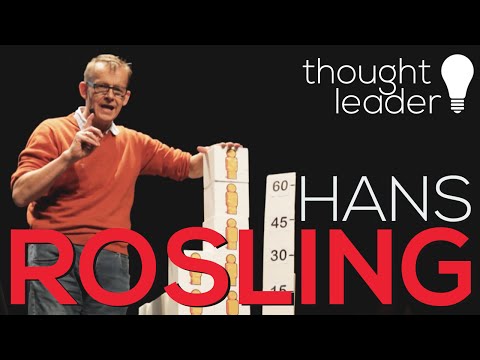
Hans Rosling uses population statistics to explain why the world population will level off rather than grow without limit. He shows that falling child mortality and rising prosperity lead to smaller families.

CNBC · 4 HN recommenders
CNBC gets a tour of ASML's cleanrooms in the Netherlands to see how its roughly $200 million EUV lithography machines are built. It covers exploding molten tin, ultra-flat optics and why only one company can make these systems.

Wendover Productions · 2 HN recommenders
Wendover Productions explains the wave of supply shortages in 2021, arguing the causes go beyond COVID. It covers how just-in-time manufacturing was applied, container imbalances and the chip shortage.

Tom Scott · 3 HN recommenders
Tom Scott explains why Ipley Cross in England's New Forest was one of Britain's most dangerous junctions. The angled crossroads lets a car's A-pillar hide approaching traffic and cyclists because there is no relative motion in the driver's view.
Not Just Bikes · 11 HN recommenders
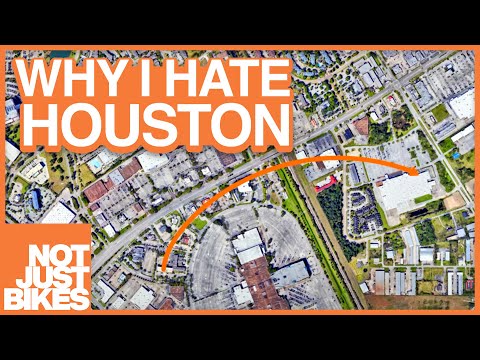
Not Just Bikes explains why the channel exists, through the creator's walk in suburban Houston. It shows how car-dependent design makes cities hostile to pedestrians.

Dropout · 4 HN recommenders
An Adam Ruins Everything segment arguing that tipping should be banned. It covers the history of tipping, its weak link to service quality, and why employers should pay a fair wage.

Wendover Productions · 5 HN recommenders
A Wendover Productions explainer on why train tickets, especially Amtrak in the US, cost so much compared with flying. It breaks down staffing, speed and the cost components behind a ticket.

Wendover Productions · 6 HN recommenders
Wendover Productions explains why US passenger rail lags behind other countries. It covers freight companies owning most of the track, geography and population density, and the economics of competing with flying.

Utah State University Extension · 4 HN recommenders
Utah State plant scientist Bruce Bugbee presents his analysis of the energy and environmental costs of vertical and indoor farming. He argues artificial lighting cannot compete with sunlight in fields or greenhouses.

All Cars with Jon · 2 HN recommenders
All Cars with Jon explains how EPA fuel economy rules, especially the footprint-based CAFE formula, push automakers away from small trucks.

Talks at Google · 6 HN recommenders
Gary Taubes presents the argument of his book Why We Get Fat to Googlers in 2011. He claims the type of calories matters more than the count, challenges calories-in-calories-out thinking and criticizes the low-fat dietary consensus.
Talks at Google · 3 HN recommenders
Berkeley sleep scientist Matthew Walker presents the science of sleep and dreams and how sleep affects health and lifespan, based on his book Why We Sleep.

Not Just Bikes · 7 HN recommenders
Not Just Bikes argues that car-dependent suburbs rob children of independence, contrasting North American suburbia with Dutch cities where kids walk and bike on their own. It is the creator's remake of an earlier video on the topic.

Tom Scott · 2 HN recommenders
Tom Scott visits Penistone to explain the Scunthorpe problem, showing why naive web and profanity filters block innocent words.

Design Theory · 2 HN recommenders
A design essay on why products designed in Western contexts often fail when deployed in developing countries. It covers expert blindness and cultural assumptions, with examples such as malaria nets and the One Laptop Per Child project.

Veritasium · 2 HN recommenders
Veritasium explains X-chromosome inactivation, where different cells in a woman's body switch off different X chromosomes, giving a mosaic pattern. It uses animation from the WEHI institute and connects to calico cat coloring.

Robert Miles AI Safety · 6 HN recommenders
Robert Miles explains instrumental convergence: why an AGI with almost any goal would tend to pursue sub-goals like self-preservation and resource acquisition. It builds on Omohundro's basic AI drives and his orthogonality thesis video.

Adam Neely · 6 HN recommenders
Adam Neely explains what perfect (absolute) pitch is, how it differs from relative and quasi-absolute pitch, and why he would not want it. He covers its drawbacks, including drift with age.

SmarterEveryDay · 5 HN recommenders
Destin Sandlin of Smarter Every Day undergoes hypoxia training and experiences his own impaired thinking as oxygen is withdrawn. The video shows how quickly and unnoticeably oxygen deprivation degrades judgment, illustrating why you put your own mask on first.

The School of Life · 2 HN recommenders
A School of Life video arguing that everyone marries someone who is somewhat wrong for them, and that this is unavoidable. It is a four-minute version of an essay by Alain de Botton.

CGP Grey · 10 HN recommenders
CGP Grey explains first-past-the-post voting and why it pushes elections toward two dominant parties. It is the first in his series on electoral systems.

Tom Scott · 3 HN recommenders
Tom Scott explains phatic expressions such as hello, thank you and how are you, which carry social meaning rather than information, and why replies like no problem can seem rude to some people.

IanHubert · 3 HN recommenders
Ian Hubert shows quick, unconventional tricks for greenscreen compositing in Blender, as a follow-up to his motion tracking video.

The Royal Institution · 3 HN recommenders
Geoffrey Hinton's 2025 Royal Institution Discourse on what AI has learned from biological intelligence and how it might surpass it. He explains neural networks and argues that human language use resembles what backpropagation-trained networks do.
Big Think · 3 HN recommenders
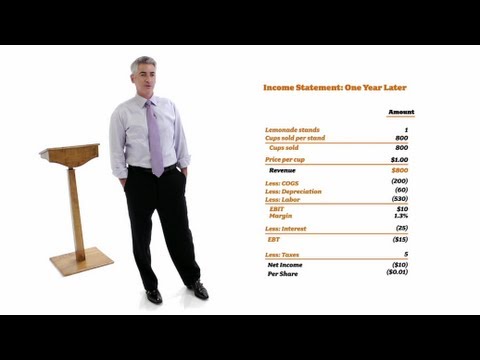
A Big Think talk in which hedge-fund manager William Ackman goes through the basics of finance and investing in under an hour. It is pitched as a crash course on the most important concepts.

PapersWeLove · 11 HN recommenders
William Byrd presents at Papers We Love NYC on what he calls the most beautiful program ever written, a Lisp interpreter written in Lisp. He walks through the metacircular interpreter and related ideas, and demos relational programming and program synthesis near the end.

dsjkhd · 6 HN recommenders
William Shatner's spoken-word cover of Pulp's 'Common People', from his album Has Been.

Wim Hof · 2 HN recommenders
A guided Wim Hof breathing session of three rounds at a slow pace, building from a 30 second to a 90 second breath hold. An on-screen bubble animation helps you keep the rhythm.

Dave's Garage · 3 HN recommenders
Dave Plummer, a retired Microsoft engineer who wrote Task Manager, responds to the claim that Windows sucks. He describes how he would fix common annoyances, in what he calls a love letter to Windows wrapped in a rant.