THE ARCHIVE · EVERY DISCOVERY
Video directory / 39
3,553 videos with summaries and linked Hacker News recommendations, arranged by title.

Programming is terrible—Lessons learned from a life wasted. EMF2012
tef ebooks · 3 HN recommenders
Tef's EMF 2012 talk on lessons from a career in programming, a candid and humorous look at why programming is so often terrible. Slides and a draft script are available online.

Progressive Performance (Chrome Dev Summit 2016)
Chrome for Developers · 4 HN recommenders
Alex Russell's Chrome Dev Summit 2016 talk on building web experiences that work on slow, flaky networks and low-power devices. It argues developers should focus on the performance of real-world mobile hardware rather than desktop machines.

Project Code Rush - The Beginnings of Netscape / Mozilla Documentary
The Documentary Network · 13 HN recommenders
Code Rush is a one-hour documentary following Netscape engineers in Silicon Valley through the company's last year as an independent firm. It covers the Mozilla open-source announcement, the frantic push to ready the source for release by March 31, 1998, and the toll on engineers' lives before the AOL acquisition.

Project Starline: Feel like you're there, together
Google · 2 HN recommenders
Google's short promo for Project Starline, a booth that shows a life-size, three-dimensional view of the person you are talking to. It presents the technology as a magic window for friends, families and co-workers who are far apart.

Propaganda Games: Sesame Credit - The True Danger of Gamification - Extra Credits
Extra Credits · 7 HN recommenders
An Extra Credits episode on China's Sesame Credit, which gamifies obedient citizenship through a social score. It covers how the system rewards conformity and pressures people through their friends' behavior.

Protecting Privacy with MATH (Collab with the Census)
minutephysics · 2 HN recommenders
minutephysics, in collaboration with the US Census Bureau, explains differential privacy and why the 2020 census adds noise to protect individuals' data. It walks through how statistics can leak private information.

Psp collections: views and more by Paul Phillips
AI Council · 2 HN recommenders
Paul Phillips, a major Scala compiler contributor, gives a long talk on Scala collections and views, using it to critique Scala's design and direction.

Ptolemy and Homer (Simpson)
Santiago Ginnobili · 3 HN recommenders
A short animation reconstructing a planet's looping orbit using Ptolemy's epicycles and deferents, with the epicycles tracing out the face of Homer Simpson. It shows how enough circles can reproduce nearly any shape.

Public Service Broadcasting - Go!
PSBHQVEVO · 2 HN recommenders
Music video for Public Service Broadcasting's "Go!" from the album The Race For Space, built from NASA audio and archival material of Apollo-era voices.

Pulling Clear Images Directly Off Satellites | GOES-15,16,17 and Himawari 8 HRIT
The Thought Emporium · 3 HN recommenders
The Thought Emporium shows how to receive clear images directly from GOES-15, 16 and 17 and Himawari 8 geostationary weather satellites with software-defined radio. It covers the extra effort needed to receive GOES data.

Pulling Power from the Sky: The Story of Makani [Feature Film]
X, The Moonshot Factory · 6 HN recommenders
A feature-length film by the Makani team chronicling their thirteen-year effort to build energy kites that harvest wind power, with footage from test sites in Hawaii, California and Norway. It shows the engineering, the team and the eventual shutdown.

Pure Functional Programming in Excel • Felienne Hermans • GOTO 2016
GOTO Conferences · 5 HN recommenders
Felienne Hermans argues that Excel is the world's most popular programming language and shows how spreadsheets work as a pure functional language. She implements a few mathematical problems in spreadsheet formulas to illustrate why they are so powerful and approachable.

Put Your Name on Your Game, a Talk by Bennett Foddy and Zach Gage
GDC Festival of Gaming · 3 HN recommenders
At GDC 2019, Bennett Foddy and Zach Gage ask why game developers rarely sign their work. They argue that indie developers could benefit from putting their names on their games.

Pythagoras' theorem (a) | Math History | NJ Wildberger
Insights into Mathematics · 6 HN recommenders
The first lecture of N J Wildberger's History of Mathematics course, starting with Pythagoras' theorem and following Stillwell's text. It emphasizes the flow of ideas over proofs.

Q&A - Helion Energy, NIF, Space and more
Improbable Matter · 2 HN recommenders
A roughly three-hour technical livestream Q&A on Helion Energy's fusion approach and the National Ignition Facility. It covers neutron production, shielding, energy recovery, diagnostics and why tokamaks might fare better.

QuakeCon 2011 - John Carmack Keynote
QuakeCon Official · 3 HN recommenders
John Carmack's keynote at QuakeCon 2011, an hour and a half of wide-ranging talk about id Software, Rage, engine open-sourcing, patents and programming practices.

QuakeCon 2012 - John Carmack Keynote
QuakeCon Official · 6 HN recommenders
John Carmack's long QuakeCon 2012 keynote, a free-ranging talk covering software engineering, game platforms, game streaming, and his early head-mounted display and VR work.

Quantitative Easing Explained
malekanoms · 2 HN recommenders
An animated xtranormal explainer on quantitative easing, what the Federal Reserve was doing and how things got there. It was made by Omid Malekan.
Quants | The Alchemists of Wall Street | VPRO documentary
vpro documentary · 2 HN recommenders
A VPRO documentary on quantitative analysts who designed the mathematical models and high-speed trading systems behind modern finance. It features figures such as Paul Wilmott and asks what risks come from treating markets as a machine.
Quantum Computing Expert Explains One Concept in 5 Levels of Difficulty | WIRED
WIRED · 2 HN recommenders
IBM's Dr. Talia Gershon explains quantum computing to five people of increasing expertise: a child, teen, college student, grad student and professional. The WIRED series format moves from simple analogies to technical detail.
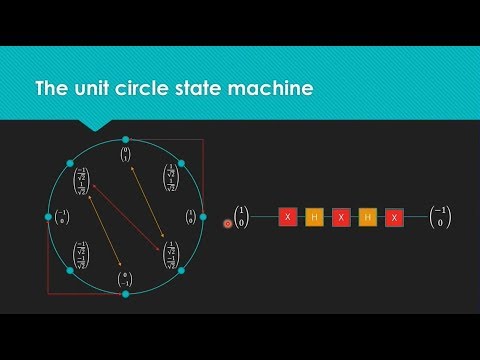
Quantum Computing for Computer Scientists
Microsoft Research · 12 HN recommenders
An 88-minute Microsoft Research talk that explains how quantum computers beat classical ones using basic linear algebra, qubits, superposition and gates. It works through the Deutsch oracle problem and ends with entanglement, teleportation and a live demo.
Quantum Entanglement & Spooky Action at a Distance
Veritasium · 9 HN recommenders
Veritasium explains quantum entanglement and spooky action at a distance, walking through Bell's inequality and the experiments that rule out hidden variables, in under ten minutes.
Quantum Entanglement and the Great Bohr-Einstein Debate | Space Time | PBS Digital Studios
PBS Space Time · 3 HN recommenders
PBS Space Time explains the Bohr-Einstein debate over quantum mechanics and how quantum entanglement settled it. It covers the weirdness of measurement and nonlocal correlations.

Quantum Expert Insight: Peter Shor
Qiskit · 2 HN recommenders
Peter Shor tells the story of how he discovered Shor's Algorithm, from his early mathematics days to the quantum factoring breakthrough. It was recorded at MIT at the Physics of Computation conference.

Quantum Field Theory visualized
ScienceClic English · 2 HN recommenders
ScienceClic gives a 15-minute animated introduction to quantum field theory, covering fields, spin, conserved quantities, the standard model and interactions.
Quantum Fields: The Real Building Blocks of the Universe - with David Tong
The Royal Institution · 5 HN recommenders
David Tong, a Cambridge theoretical physicist, explains at the Royal Institution that the fundamental building blocks of nature are quantum fields rather than particles. He covers what we know about these fields and how they fit into the Standard Model.

Qubes OS: The Operating System That Can Protect You Even If You Get Hacked
Micah Lee · 2 HN recommenders
Micah Lee's Circle of HOPE 2018 talk on Qubes OS, which isolates activities in separate virtual machines so one compromise, such as a bad PDF or USB stick, does not expose everything. He gives an overview timed around the Qubes 4.0 release.

Quick Start, Episode 7: Crimes... And Felonies.
Cathode Ray Dude - CRD · 2 HN recommenders
Cathode Ray Dude covers two bizarre HP 'Quick Start' features: QuickLook, an offline email client built on EFI firmware, and Daystarter, which hijacks the Windows boot process. It includes an explanation of EFI applications and why HP built these things.
Quick-sort with Hungarian (Küküllőmenti legényes) folk dance
AlgoRythmics · 2 HN recommenders
Hungarian folk dancers from Sapientia University act out the quicksort algorithm step by step, with music. It is part of the AlgoRythmics series of sorting algorithms performed as dance.
R. P. Feynman on the difference between knowing the name of something and knowing something.
x1x2x3ct · 2 HN recommenders
A two-minute clip of Richard Feynman on the difference between knowing the name of something and actually knowing it. He uses the example of knowing a bird's name in every language and still knowing nothing about the bird.

RAAIS 2017 - Simon Knowles, Co-Founder and CTO of Graphcore
The Research and Applied AI Summit - RAAIS · 3 HN recommenders
Simon Knowles, co-founder and CTO of Graphcore, talks about "intelligence processors", chips designed specifically for machine learning. The talk was given at the RAAIS 2017 summit and covers Graphcore's architecture.

Racing the Beam Explained - Atari 2600 CPU vs. CRT Television
Retro Game Mechanics Explained · 2 HN recommenders
Retro Game Mechanics Explained shows how the Atari 2600 draws images with almost no video memory, by having the CPU race the CRT beam line by line. It walks through the techniques in detail.

RacketCon 2013: Dan Liebgold - Racket on the Playstation 3? It's Not What you Think!
Racket · 3 HN recommenders
Dan Liebgold of Naughty Dog gives a RacketCon 2013 keynote on using Racket in PlayStation 3 game development. He explains the Racket-based DSLs used for game data and scripting, which replaced the studio's earlier GOAL-based toolchain.

Raft lecture (Raft user study)
Diego Ongaro · 4 HN recommenders
John Ousterhout lectures on the Raft consensus algorithm, made for the Raft user study comparing how students learn Raft and Paxos. It covers leader election and log repair.

Raiden Warned About AI Censorship - MGS2 Codec Call (2023 Version)
CYBERGEM · 2 HN recommenders
A fan-made Metal Gear Solid 2 codec call using AI voice synthesis, in which the Colonel warns Raiden about using AI to censor the internet and enforce digital ID. It riffs on the game's 'Selection for Societal Sanity' conversation.
Rails Conf 2012 Keynote: Simplicity Matters by Rich Hickey
Confreaks · 8 HN recommenders
Rich Hickey's keynote at RailsConf 2012, a close sibling of his 'Simple Made Easy' talk. He distinguishes simple (not intertwined) from easy (familiar), and argues that software complexity comes from complecting things, with Rails-specific examples including large gem collections.

Rails Conf 2013 The Magic Tricks of Testing by Sandi Metz
Confreaks · 5 HN recommenders
Sandi Metz's RailsConf 2013 talk offers practical guidelines for deciding what to test and how, so tests stay cheap and stable. She argues for testing the public interface rather than implementation and using mocks appropriately.

Rails World 2024 Opening Keynote - David Heinemeier Hansson
Ruby on Rails · 6 HN recommenders
DHH's opening keynote at Rails World 2024 in Toronto, where Rails 8 beta shipped. It covers built-in authentication, Propshaft, Solid Cache, Solid Queue, Solid Cable, Kamal 2 and Thruster, pitching the One Person Framework that needs no PaaS.

RailsConf 09: Robert Martin, "What Killed Smalltalk Could K
O'Reilly · 5 HN recommenders
Robert Martin's RailsConf 2009 talk looks at why Smalltalk lost out despite its technical strengths. He draws lessons about language communities and arrogance that he argues could hurt Ruby too.

RailsConf 2014 - All the Little Things by Sandi Metz
Confreaks · 15 HN recommenders
Sandi Metz takes an ugly section of conditional code and refactors it into a few simple objects, bridging object-oriented theory and practice. The talk includes her take on the Gilded Rose refactoring kata and the idea that duplication is cheaper than the wrong abstraction.
RailsConf 2014 - Keynote: Writing Software by David Heinemeier Hansson
Confreaks · 3 HN recommenders
David Heinemeier Hansson's RailsConf 2014 keynote argues that programming is closer to writing than to science, with clear code produced by iterating through drafts. It prioritizes clarity and craft over technical superiority.

RailsConf 2015 - Nothing is Something
Confreaks · 3 HN recommenders
Sandi Metz argues that hidden assumptions in code are missing concepts, and shows how to name and expose them so code is easier to understand and change. It covers null objects and messages in Ruby.
RailsConf 2016 - Turbolinks 5: I Can’t Believe It’s Not Native! by Sam Stephenson
Confreaks · 6 HN recommenders
Sam Stephenson's RailsConf 2016 talk on Turbolinks 5, showing how small teams can ship fast Rails apps in the browser and hybrid iOS and Android apps sharing one set of web views.

RailsConf 2016 - Rails to Phoenix by Brian Cardarella
Confreaks · 4 HN recommenders
Brian Cardarella's RailsConf 2016 talk on why and how teams can move from Rails to Elixir and Phoenix. It covers performance gains without losing productivity and how to introduce Phoenix in an organization.

RailsConf 2019 - Opening Keynote by David Heinemeier Hansson
Confreaks · 3 HN recommenders
David Heinemeier Hansson's opening keynote at RailsConf 2019 argues against the expectation of payment for open source work, drawing on his experience releasing Rails. It also includes lighter asides about the industry.

Ralph Langner: Cracking Stuxnet, a 21st-century cyber weapon
TED · 2 HN recommenders
In an 11-minute TED talk, Ralph Langner explains how his team reverse-engineered the Stuxnet worm and worked out that it targeted industrial control systems, with a covert state origin. It is a compact look at cyber-forensics.

Ramanujan: Making sense of 1+2+3+... = -1/12 and Co.
Mathologer · 3 HN recommenders
Mathologer examines how identities like 1+2+3+... = -1/12 arise in Ramanujan's work, starting from his 1913 letter to Hardy. The video explains the rules for summing infinite series and why such results are meaningful but not naive sums.

Randomness is Random - Numberphile
Numberphile · 4 HN recommenders
Numberphile with Simon Pampena on how humans misunderstand randomness, including coin-flip sequences, run lengths and the gambler's fallacy.

Randy Pausch Lecture: Time Management
Carnegie Mellon University · 4 HN recommenders
Carnegie Mellon professor Randy Pausch gives a lecture on time management at the University of Virginia in 2007. He covers practical habits such as tackling important tasks first and distinguishing important from urgent work.
Randy Pausch's Last Lecture: Achieving Your Childhood Dreams
Carnegie Mellon University · 12 HN recommenders
Randy Pausch's 2007 last lecture at Carnegie Mellon, given as he was dying of pancreatic cancer. He reflects on achieving childhood dreams, overcoming obstacles and helping others reach theirs.

Rant: Entity systems and the Rust borrow checker ... or something.
Jonathan Blow · 3 HN recommenders
Jonathan Blow's hour-long livestreamed response to a RustConf 2018 closing keynote about entity systems in Rust. He argues that index-based entity systems amount to manual memory management that sidesteps the borrow checker, and he talks about friction for game developers.

Rapping, deconstructed: The best rhymers of all time
Vox · 3 HN recommenders
Vox breaks down how great rappers build rhymes, from Kurtis Blow's simple bars to Biggie's smooth flow and Kendrick Lamar's dense, fast delivery. It uses on-screen visualizations of rhyme structure.

RAT POISON AND BRANDY: THE 1904 ST. LOUIS OLYMPIC MARATHON.
Jon Bois · 3 HN recommenders
Jon Bois tells the story of the 1904 St. Louis Olympic marathon, a chaotic race involving fraud, rat poison, brandy, feral dogs and near-deaths. It is an episode of his show Pretty Good.

Ray Kurzweil on "I've Got a Secret"
Sidewinder77 · 2 HN recommenders
Seventeen-year-old Ray Kurzweil appears on the TV show I've Got a Secret in 1965, playing a piece of music composed by a computer program he built.

Raymond Hettinger - Dataclasses: The code generator to end all code generators - PyCon 2018
PyCon 2018 · 2 HN recommenders
Raymond Hettinger explains Python's dataclasses module, showing the problem it solves and its key design decisions. He places it in a progression from tuples and dicts through named tuples and attrs.

Raymond Hettinger, Keynote on Concurrency, PyBay 2017
SF Python · 4 HN recommenders
Raymond Hettinger's PyBay 2017 keynote on concurrency in Python. It covers threads, processes, asyncio, locks and the GIL, with live shell-based examples.

Razor1911
Dubmood · 3 HN recommenders
Razor 1911's eponymous demo celebrating 40 years of the group, which won first place at the Revision 2026 demo competition and the public's choice award. It is a retrospective of keygen and warez scene culture with chiptune music.

re:publica 2012 - Eben Moglen - Freedom of Thought Requires Free Media
re:publica · 2 HN recommenders
Eben Moglen's re:publica 2012 talk argues that media which spy on and data-mine the public threaten freedom of thought, and that free technology and free culture are needed to protect it.

re:publica 2015 - Aral Balkan: Beyond The Camera Panopticon
re:publica · 5 HN recommenders
Aral Balkan's re:publica 2015 talk argues that people are the product of surveillance-based business models. It makes an ethical case against data monopolies and for privacy as a human right.

React Helsinki February 2020
Fraktio · 2 HN recommenders
React Helsinki meetup recording featuring a talk on lessons with Apollo GraphQL and Linear co-founder Tuomas Artman on real-time sync for web apps. The sync talk explains Linear's local-first architecture.