THE ARCHIVE · EVERY DISCOVERY
Video directory / 31
3,553 videos with summaries and linked Hacker News recommendations, arranged by title.

Kursk: The Epic Armored Engagement (2013)
The National WWII Museum · 3 HN recommenders
A panel at The National WWII Museum on the Battle of Kursk, moderated by Keith Huxen with historians Robert Citino and John Parshal. The discussion covers the armored engagement and the German, Soviet and US approaches to tank production.
Kurt Vonnegut on the Shapes of Stories
David Comberg · 5 HN recommenders
A short lecture in which Kurt Vonnegut graphs the simple shapes of stories, such as Man in Hole and Boy Gets Girl. He sketches how fortune rises and falls over a narrative.

Kurt Vonnegut, Shape of Stories (subtitulos castellano)
Eva CollinsAlonso · 6 HN recommenders
Kurt Vonnegut's 2004 Case College lecture, with Spanish subtitles, in which he sketches the shapes of stories on a blackboard. He plots story arcs as good and bad fortune against time.

Kylie Minogue - Come Into My World (Official Video) [Full HD Remastered]
Kylie Minogue · 2 HN recommenders
The official music video for Kylie Minogue's Come Into My World, directed by Michel Gondry, built around a looping scene with multiplying copies of Kylie.

Lake Peigneur Drilling Accident
ankerssm · 2 HN recommenders
A short documentary about the 1980 Lake Peigneur accident in Louisiana, where an oil rig drilled into a salt mine beneath the lake. The lake drained into the mine, creating a whirlpool that swallowed barges.

Lambda Calculus - Fundamentals of Lambda Calculus & Functional Programming in JavaScript
Fullstack Academy · 5 HN recommenders
Gabriel Lebec's Fullstack Academy talk introduces lambda calculus syntax, the history of mathematical logic, and the essence of functional programming using JavaScript. It also covers combinators, currying and Church encodings.

Lambda World 2018 - What FP can learn from Smalltalk by Aditya Siram
Lambda World · 2 HN recommenders
Aditya Siram argues that functional programming has much to learn from Smalltalk's interactivity, using Pharo and Squeak to show live, visual, explorable programming environments.

Land of Lisp- The Music Video!
lisperati · 2 HN recommenders
A playful music video promoting the book Land of Lisp, with a song about Lisp programming.

Large Language Models from scratch
Graphics in 5 Minutes · 3 HN recommenders
A short cartoon explaining how language models like ChatGPT work, from autocomplete and conditional probabilities to neural networks, gradient descent and backpropagation. It shows how networks act as universal function approximators.

Larnell Lewis Hears "Enter Sandman" For The First Time
Drumeo · 2 HN recommenders
Drummer Larnell Lewis hears Metallica's Enter Sandman for the first time on Drumeo and learns to play it by ear, using his musical vocabulary.

Larry Hastings - Removing Python's GIL: The Gilectomy - PyCon 2016
PyCon 2016 · 5 HN recommenders
Larry Hastings explains what Python's GIL is, what problems it solves and how it works, and presents his Gilectomy project to remove it, including the performance and C-extension obstacles.

Lars Andersen: A new level of archery
larsandersen23 · 4 HN recommenders
Archer Lars Andersen demonstrates fast, accurate shooting techniques he says he revived from historical art and texts, arguing Hollywood archery is not historical.

Larynx Demo
synesthesiam · 3 HN recommenders
A demonstration of Larynx, an offline open source neural text-to-speech system supporting nine languages. The video itself is narrated with a Larynx-generated voice.

Laws that choke creativity | Larry Lessig
TED · 2 HN recommenders
Larry Lessig's TED talk argues that copyright law chokes creativity, drawing on John Philip Sousa, celestial copyrights and the ASCAP cartel to make the case for reviving remix culture.

Lawyer. Passport. Locksmith. Gun. (A Talk About Risk & Preparedness)
DeviantOllam · 2 HN recommenders
Deviant Ollam gives a long talk on risk and preparedness: get a lawyer, passport, locksmith and other resources before you need them. It covers practical steps to build defenses against serious problems in life.

Lazerhawk ~ Redline Full Album
Stay Nifty · 3 HN recommenders
A full-album upload of Lazerhawk's debut synthwave album Redline, with the track list and timestamps in the description.
LEADERSHIP LAB: The Craft of Writing Effectively
UChicago Social Sciences · 15 HN recommenders
Larry McEnerney of the University of Chicago Writing Program gives a graduate-student session on writing effectively. His core idea is that readers care about value to them, not the writer's thinking process.

LEADERSHIP LAB: Writing Beyond the Academy 1.23.15
UChicago Social Sciences · 4 HN recommenders
Larry McEnerney of the University of Chicago Writing Program argues that good writing is defined by what readers value, not by rules or the writer's own ideas. He explains why academic habits fail outside academia and how to write so readers find the work valuable.

Leading Questions - Yes Prime Minister
LimeXd · 4 HN recommenders
A clip from Yes Prime Minister in which Sir Humphrey shows how leading questions can make a survey support or oppose national service. It is a short satirical scene.

Leaked: Pentagon's UFO -BUSTED!
Thunderf00t · 2 HN recommenders
Thunderf00t analyzes the leaked Pentagon UFO videos and offers mundane explanations for the fuzzy triangle and tic-tac footage.

Leap Technology
aamoviebb · 2 HN recommenders
A promotional video for Leap, the navigation technology invented by Jef Raskin, demonstrated on the Canon Cat computer around 1987. It shows keyboard-driven search and cursor positioning in place of a mouse.

Learn Jacques Pépin's famous omelet techniques
American Masters PBS · 3 HN recommenders
In this American Masters clip, Jacques Pepin shows two different techniques for making a perfect omelet, a dish he is famous for teaching America.

Learn Low Poly Modeling in Blender 2.9 / 2.8
Imphenzia · 4 HN recommenders
Imphenzia's 83-minute tutorial covers the low poly modeling techniques he learned over five years of Blender use, with timestamps from navigation and extrusion onward. It uses Blender 2.83 with default keys.
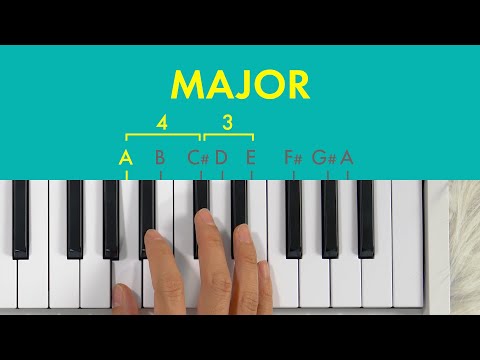
Learn music theory in half an hour.
ANDREW HUANG · 4 HN recommenders
Andrew Huang teaches the basics of music theory in about half an hour, covering intervals, chords and patterns. He stresses understanding how music works over memorizing terminology.

Learn to Paint with Mathematics
Inigo Quilez · 3 HN recommenders
Inigo Quilez live-codes a painting using only mathematics in a shader, building it up step by step. The linked Shadertoy source shows the result.
Learning from dirty jobs | Mike Rowe
TED · 4 HN recommenders
Mike Rowe, host of Dirty Jobs, shares stories from messy real-world jobs in this TED talk. He argues that hard work has been unjustly degraded in society.
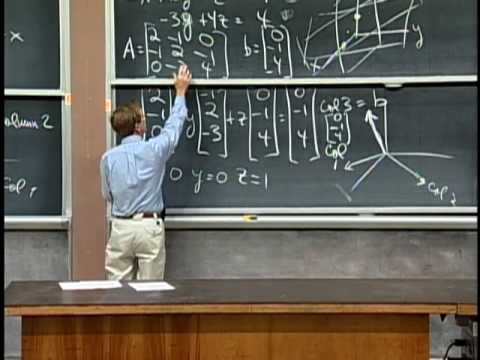
Lec 1 | MIT 18.06 Linear Algebra, Spring 2005
MIT OpenCourseWare · 11 HN recommenders
The first lecture of Gilbert Strang's MIT 18.06 Linear Algebra course, covering the geometry of linear equations. It opens a full 35-lecture university course.
Lec 1 | MIT 6.00 Introduction to Computer Science and Programming, Fall 2008
MIT OpenCourseWare · 4 HN recommenders
First lecture of MIT 6.00, an introductory computer science course taught in Python by Eric Grimson and John Guttag. It covers the goals of the course, what computation is, and data types, operators and variables.
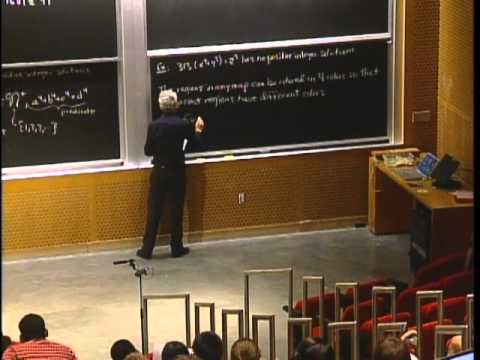
Lec 1 | MIT 6.042J Mathematics for Computer Science, Fall 2010
MIT OpenCourseWare · 3 HN recommenders
The first lecture of MIT 6.042J Mathematics for Computer Science, taught by Tom Leighton, introducing mathematical proofs. It covers propositions, implication and basic proof methods.
Lecture 01 - The Learning Problem
caltech · 5 HN recommenders
The first lecture of Caltech's CS 156 Machine Learning course by Yaser Abu-Mostafa, introducing the learning problem and supervised, unsupervised and reinforcement learning. It is one of 18 lectures in the Learning from Data course.
Lecture 1 - How to Start a Startup (Sam Altman, Dustin Moskovitz)
YC Root Access · 3 HN recommenders
The opening lecture of the How to Start a Startup course at Stanford, with Sam Altman covering ideas and products and Dustin Moskovitz discussing why to start a startup.
Lecture 1 | Convex Optimization I (Stanford)
Stanford · 2 HN recommenders
The introductory lecture of Stephen Boyd's Stanford Convex Optimization I course (EE 364A). It outlines convex sets, functions and problems, and the course's coverage of least-squares, linear and semidefinite programming, duality and interior-point methods.
Lecture 1 | Introduction to Convolutional Neural Networks for Visual Recognition
Stanford University School of Engineering · 2 HN recommenders
The first lecture of Stanford's CS231n course on convolutional neural networks for visual recognition. It surveys the history and key challenges of computer vision, from the Cambrian explosion and Hubel and Wiesel to ImageNet.
Lecture 1 | Machine Learning (Stanford)
Stanford · 11 HN recommenders
The first lecture of Andrew Ng's Stanford CS229 Machine Learning course, giving an overview of the course. It introduces supervised and unsupervised learning, learning theory and reinforcement learning.

Lecture 1 | Modern Physics: Classical Mechanics (Stanford)
Stanford · 3 HN recommenders
The first lecture of Leonard Susskind's Stanford Continuing Studies course on modern physics, beginning with classical mechanics. It is the start of a six-quarter sequence on the theoretical foundations of physics.

Lecture 1 | Natural Language Processing with Deep Learning
Stanford University School of Engineering · 3 HN recommenders
The first lecture of Stanford's Natural Language Processing with Deep Learning course, taught by Chris Manning and Richard Socher. It introduces NLP and word vectors, including SVD, skip-gram, CBOW, negative sampling and word2vec.

Lecture 1 | Programming Methodology (Stanford)
Stanford · 2 HN recommenders
First lecture of Stanford's CS106A Programming Methodology by Mehran Sahami, giving a course overview and starting on programming. The course teaches software engineering principles using Java.

Lecture 1 | Programming Paradigms (Stanford)
Stanford · 3 HN recommenders
The first lecture of Stanford's CS107 Programming Paradigms, taught by Jerry Cain, giving an overview of the course. The course goes from C and assembly through C++, concurrency, Scheme and Python.

Lecture 1 | The Theoretical Minimum
Stanford · 3 HN recommenders
Leonard Susskind opens Stanford Continuing Studies' Theoretical Minimum series with an introduction to quantum mechanics, a course for people who want real physics rather than popularization. It assumes some calculus and linear algebra.
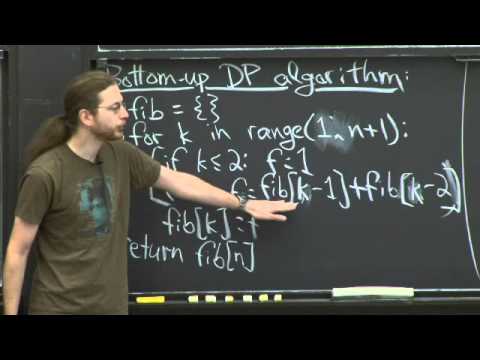
Lecture 19: Dynamic Programming I: Fibonacci, Shortest Paths
MIT OpenCourseWare · 4 HN recommenders
Erik Demaine's MIT 6.006 lecture introducing dynamic programming through Fibonacci numbers and shortest paths. It covers memoization, subproblems and optimal substructure.

Lecture 1: Introduction
MIT 6.824: Distributed Systems · 5 HN recommenders
The opening lecture of MIT 6.824 Distributed Systems (Spring 2020), introducing the course and core challenges of distributed systems. It begins a playlist that goes on to cover Raft and other consensus papers in Go.

Lecture 1: Introduction to Information Theory
Jakob Foerster · 3 HN recommenders
The first lecture of David MacKay's Cambridge course on information theory, pattern recognition and neural networks. It introduces the core ideas of his book Information Theory, Inference, and Learning Algorithms.

Lecture 1: Introduction to Power and Politics in Today’s World
YaleCourses · 3 HN recommenders
The opening lecture of Ian Shapiro's Yale course Power and Politics in Today's World, which examines political dynamics and institutions over the past quarter century, including inequality, declining unions and new forms of authoritarianism.

Lecture 1: Probability and Counting | Statistics 110
Harvard University · 3 HN recommenders
Lecture 1 of Harvard's Statistics 110 with Joe Blitzstein, introducing sample spaces, the naive definition of probability, counting, binomial coefficients and the sampling table.

Lecture 1A | MIT 6.001 Structure and Interpretation, 1986
MIT OpenCourseWare · 11 HN recommenders
The first lecture of MIT's 1986 6.001 Structure and Interpretation of Computer Programs, given by Harold Abelson, introducing Lisp and the idea of computer science as the study of process.

Lecture 1A: Overview and Introduction to Lisp
MIT OpenCourseWare · 10 HN recommenders
The first lecture of MIT's 6.001 (SICP) with Abelson and Sussman, giving an overview of the course and an introduction to Lisp. It argues that computer science is about managing complexity and abstraction, not computers.

Lecture 6: Version Control (git) (2020)
Missing Semester · 9 HN recommenders
A lecture from MIT's Missing Semester course covering version control with git. It builds up git from its data model rather than from commands.

Lecture 7: Introduction to Galois Fields for the AES by Christof Paar
Introduction to Cryptography by Christof Paar · 3 HN recommenders
Christof Paar's university lecture introducing Galois fields and finite-field arithmetic as used in AES. It covers the mathematics behind the AES S-box.

Lecture by Douglas Hofstadter: Albert Einstein on Light; Light on Albert Einstein
Uppsala universitet · 2 HN recommenders
Douglas Hofstadter lectures at Uppsala University on how analogy and daring thinking drove Einstein's discovery of light quanta. He argues deep insight in physics comes from imaginative leaps rather than rigid logic.
Lecture: 2017 Maps of Meaning 01: Context and Background
Jordan B Peterson · 6 HN recommenders
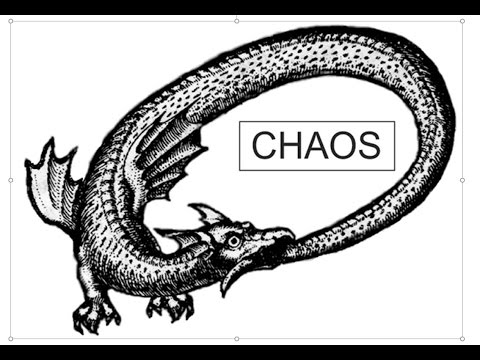
The first lecture of Jordan Peterson's 2017 Maps of Meaning course, setting out the Cold War context for his theory of belief and culture. He introduces the narrative structure of culture and archetypal characters for the individual, the known and the unknown.

Lecture: Biblical Series I: Introduction to the Idea of God
Jordan B Peterson · 3 HN recommenders
Jordan Peterson's first lecture in his Biblical Series examines the idea of God as sovereignty and power abstracted from any individual ruler, and as the pattern inherent in human dominance hierarchies.

LED Experiments: Making Holiday Lights Less Garish
Technology Connections · 3 HN recommenders
Technology Connections experiments with filtering white and colored LEDs to make holiday lights look less garish. He explains why narrowband LED strings look harsh compared with incandescent bulbs.

Lee Cronin: Origin of Life, Aliens, Complexity, and Consciousness | Lex Fridman Podcast #269
Lex Fridman · 2 HN recommenders
Lex Fridman interviews University of Glasgow chemist Lee Cronin about the origin of life, aliens, complexity and consciousness. The conversation centers on Cronin's assembly theory.

Lenses, Folds, and Traversals
Edward Kmett · 3 HN recommenders
Edward Kmett's talk to the NY Haskell User Group on the lens library, building from fmap and function composition up to lenses, folds and traversals. It shows how these composable combinators access and modify parts of data structures.

Leonard Cohen - Everybody Knows (Official Audio)
LeonardCohenVEVO · 3 HN recommenders
The official audio of Leonard Cohen's 'Everybody Knows' from the album I'm Your Man.

Leonard Susskind on The World As Hologram | TVO Docs
TVO Docs · 7 HN recommenders
Stanford physicist Leonard Susskind gives a public lecture on the holographic principle, the indestructibility of information and the nature of black holes. It asks whether the world could be a hologram.

Leonard Susskind | "ER = EPR" or "What's Behind the Horizons of Black Holes?" - 1 of 2
Stanford Institute for Theoretical Physics · 3 HN recommenders
Stanford physicist Leonard Susskind gives the first of two mini-lectures on "ER = EPR", the idea that quantum entanglement and wormholes are related. It covers what lies behind black hole horizons.

Leslie Lamport: Thinking Above the Code
Microsoft Research · 5 HN recommenders
Leslie Lamport argues that programmers, like architects, should write rigorous specifications before coding, especially for concurrent and distributed systems. The talk introduces the case for writing specs (the TLA+ mindset) as a way of thinking above the code.

LESSON 1: Do Not Obey In Advance
Timothy Snyder · 2 HN recommenders
The first lesson from Timothy Snyder's short video series accompanying On Tyranny, arguing that most of the power of authoritarianism is freely given when people comply in advance. It runs about eight minutes.

Let Vim Do the Typing
thoughtbot · 3 HN recommenders
George Brocklehurst of thoughtbot demonstrates Vim's built-in completion mechanisms, from word, line and block completion to ctags. The aim is to type less and make fewer typos.