THE VIDEO SHELF · machine learning fundamentals
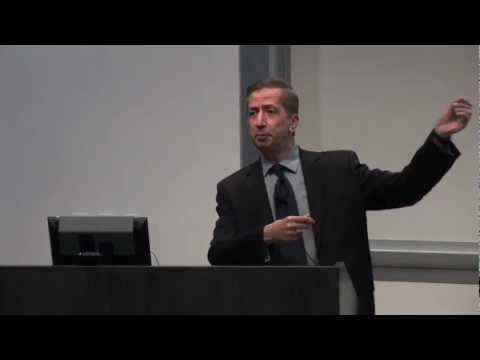
Lecture 1 | Machine Learning (Stanford)
The first lecture of Andrew Ng's Stanford CS229 Machine Learning course, giving an overview of the course. It introduces supervised and unsupervised learning, learning theory and reinforcement learning.
Why HN readers recommended it
Recommended as the rigorous, math-heavy original course, deeper than the Coursera version, for learning machine learning.
This is a summary from the source dataset, not an endorsement by Hacker News or the video creator.
Video & recommendation details
- Creator / channel
- Stanford
- Topic
- machine learning fundamentals
- Format
- course
- Level
- intermediate
- HN recommenders in dataset
- 11
- HN mentions in dataset
- 14
- Recommendation years in dataset
- 2008–2020
These counts and years describe the included Hacker News records; they are not YouTube views or the video’s publication date.
From the original HN conversations
Excerpts from the recorded comments. Follow each source for the full comment and surrounding discussion.
I'd suggest going back to the original youtube[1] and course materials[2]. Coursera version is nothing but a hand-wavy watered down "feel good" version of the original class. I also really like the Caltech's take "Learning from data"[3] [1] [VIDEO] [2] [LINK] [3] [LINK]
11001 on Hacker News · 2014-01
In Free eBooks On Machine LearningStart leaning from the guy right now: [VIDEO] Stanford class on machine learning by Andrew Ng, 20 lectures.
schtog on Hacker News · 2008-08
In Stanford's "autonomous" helicopters teach themselves to flyI second the nomination of Bishop. It is the standard text. It is only two years old, and Bishop will teach you machine learning the way that the field practices it nowadays. In my lab of fourteen people, we must have six or so copies …
bravura on Hacker News · 2009-02
In Ask HN: Good books on machine learning?
Summaries, classifications and recommendation records are from the HackerTube source dataset. Read about this library and its limitations.