
How to tie your shoes | Terry Moore
TED · 4 HN recommenders
Terry Moore's three-minute TED talk showing a better way to tie shoes, replacing the common granny knot with a square knot so laces stay tied.
THE ARCHIVE · EVERY DISCOVERY
3,553 videos with summaries and linked Hacker News recommendations, arranged by title.
TED · 4 HN recommenders
Terry Moore's three-minute TED talk showing a better way to tie shoes, replacing the common granny knot with a square knot so laces stay tied.
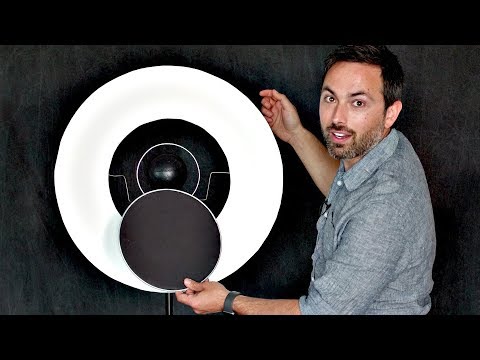
Veritasium · 8 HN recommenders
Veritasium explains what a black hole should look like, using J.P. Luminet's 1979 work and a cardboard 3D model to show how light bends around it. It was made just as the first black hole image was released.

John Mcafee · 2 HN recommenders
A bizarre, tongue-in-cheek video in which John McAfee himself supposedly shows how to uninstall McAfee antivirus. It is known for its NSFW sex and drug references.

TEDx Talks · 3 HN recommenders
A short TEDx talk by Joe Smith teaching how to dry your hands with a single paper towel. It shows a simple technique for cutting waste.

The Hated One · 2 HN recommenders
A 2018 tutorial explaining uBlock Origin's advanced user mode, including how to block scripts and use the dynamic filtering settings. It positions the extension as a replacement for tools like uMatrix.

Everyday Astronaut · 2 HN recommenders
Everyday Astronaut's guide to visiting Starbase, Texas to see Starship, covering what and where it is, which areas close during launches, where to watch from, where to fly into and stay, and things to do.

The British Museum · 3 HN recommenders
British Museum curator Irving Finkel teaches how to write cuneiform, with a colleague following along. It is a short, lively introduction to the script.
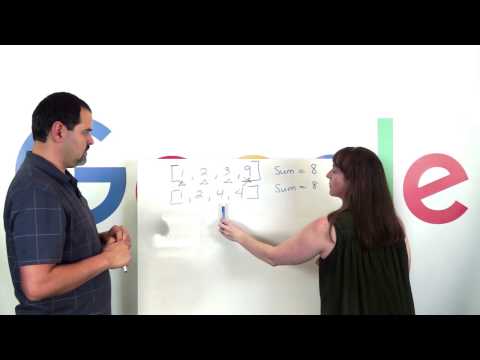
Life at Google · 2 HN recommenders
Two Google engineers perform a mock coding interview and then discuss best practices for candidates, including asking clarifying questions and communicating while solving.

@HOLLYWOOD · 2 HN recommenders
Pixar staff tell the story of how Toy Story 2 was almost deleted from the studio's computers and was saved by a home computer backup.

Veritasium · 4 HN recommenders
Veritasium explains how trees lift water from roots to the top of tall trunks, using transpiration pull and the negative pressure that liquid water can sustain. It explains why trees do not need pumps or valves.

People Make Games · 5 HN recommenders
People Make Games investigates the unregulated CS:GO skin gambling economy and Valve's role in it. It includes interviews with people who lost large sums and examines why Valve does not intervene.

Tokyo Llama · 3 HN recommenders
The Tokyo Llama channel details how the creators found and bought an abandoned akiya minka house in Japan. It covers process, costs, taxes, financing and risks of renovation.

Flight Software Workshop · 2 HN recommenders
JPL's David Cummings presents at the 2025 Flight Software Workshop how the team diagnosed and fixed the 2023 Voyager 1 anomaly from billions of miles away. It walks through the flight computer and the memory fix.

Morphcat Games · 6 HN recommenders
Morphcat Games explains how they fit Micro Mages, a full-featured NES game, into 40 kilobytes. It covers compression of sprites and level layouts and other space-saving tricks.

Tantacrul · 4 HN recommenders
Tantacrul walks through how the MuseScore 4 team was built and how design decisions were made for the overhaul of a huge legacy notation app. It covers playback and engraving quality improvements.

Undefined Behavior · 3 HN recommenders
A six-minute explainer from Undefined Behavior on range (score) voting. It follows an earlier video on Arrow's Theorem and shows how range voting seems to satisfy the criteria Arrow's Theorem says no ranked system can.

Linkus7 · 3 HN recommenders
Linkus7 explains how a community reverse-engineered The Wind Waker to predict its random number generator and beat the Sploosh Kaboom battleship minigame consistently. It includes d3 animations by Peter Schmidt-Nielsen.

Veritasium · 3 HN recommenders
Veritasium explains why the kilogram is being redefined in terms of Planck's constant rather than a physical metal artifact. It visits NIST to show the Kibble balance and why measuring mass precisely is hard.

Stanford · 5 HN recommenders
Dropbox engineer Kevin Modzelewski gives a Stanford colloquium on Dropbox's history and the technical problems it faced scaling, including detailed database schema decisions.
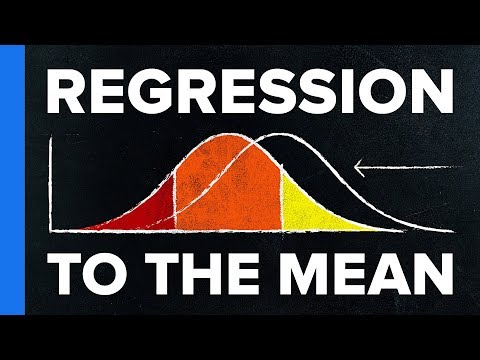
Veritasium · 3 HN recommenders
A short Veritasium video explaining regression to the mean and how ignoring it leads to wrong conclusions about punishment versus reward, medical treatments and sports streaks. It uses the example of flight instructors who believed criticism works better than praise.

Vox · 5 HN recommenders
A Vox explainer on how the wildlife trade and wet markets are linked to coronavirus and why new diseases keep emerging in China. It stresses that most people in China do not eat wildlife.

TEDx Talks · 2 HN recommenders
Clayton Christensen's TEDx talk applying business theory to personal life. He argues that career success is not the right measure of a life and urges attention to relationships and values.
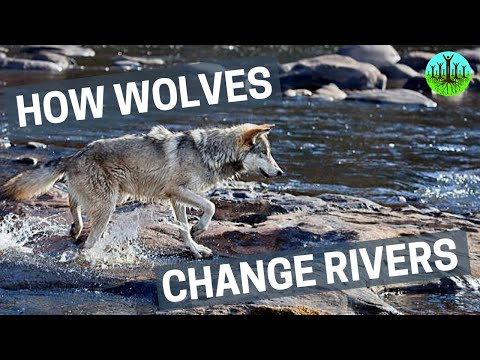
Sustainable Human · 4 HN recommenders
George Monbiot narrates how reintroducing wolves to Yellowstone after about 70 years set off a trophic cascade. The wolves changed deer behavior, vegetation recovered, and rivers changed course.

Sustainable Human · 2 HN recommenders
A short narrated video describing how reintroducing wolves to Yellowstone triggered a trophic cascade that changed wildlife, vegetation and even river courses. This is a remastered HD version of George Monbiot's viral piece.

ElectroBOOM · 4 HN recommenders
ElectroBOOM's Mehdi Sadaghdar responds to Veritasium's lamp-and-long-wire puzzle, analysing it as an electrical engineer. He covers where the original framing misleads and the role of stray capacitance.
Andrew Huberman · 2 HN recommenders
Andrew Huberman introduces how the nervous system produces sensation, emotion and behavior, and how neuroplasticity lets us change it. It covers neurons, synapses, brain chemicals and the rhythms governing focus, learning and sleep.

DeviantOllam · 3 HN recommenders
A HOPE conference talk by Howard Payne and Deviant Ollam on common keys, such as elevator and fire service keys, that open many buildings. It covers physical security weaknesses from shared key standards.

Rational Animations · 2 HN recommenders
Rational Animations explains Robin Hanson's grabby aliens model, which argues that humanity looks suspiciously early in cosmic history. Expanding civilizations set a deadline that explains our timing and bears on the Fermi paradox.

Chrome for Developers · 3 HN recommenders
Jake Archibald argues that URLs are nearly impossible for humans to interpret, especially for security. He walks through what browsers do about it, including highlighting the registrable domain, and floats a possible better design.

Technology Connections · 5 HN recommenders
Technology Connections explains why humidity matters and compares the main types of humidifiers, including evaporative and ultrasonic designs. It covers how and why you would add moisture to indoor air.

Sabine Hossenfelder · 2 HN recommenders
Sabine Hossenfelder explains why hydrogen is a poor answer for decarbonization, covering how most hydrogen comes from fossil fuels, the efficiency losses of green hydrogen and reliance on rare metals in fuel cells.

CodeParade · 3 HN recommenders
The old announcement trailer for Hyperbolica, CodeParade's Unity game set in hyperbolic and spherical space. The creator has since posted devlog videos on building it.

crisalist · 6 HN recommenders
Adam Curtis's 2016 BBC documentary HyperNormalisation, about 160 minutes long. It cuts together roughly forty years of politics, finance and technology to argue that people have retreated into a simplified fake world.

AlphaPhoenix · 8 HN recommenders
AlphaPhoenix builds a scaled-down version of the Veritasium electricity thought experiment using about a kilometer of wire and an oscilloscope. He measures how the signal actually propagates and explains the result.

LOOK MUM NO COMPUTER · 3 HN recommenders
Part one of Look Mum No Computer's series on buying a whole church pipe organ, covering how it was removed from its home. The series goes on to restoring it and rewiring it for MIDI.

Because Science · 3 HN recommenders
Kyle Hill of Because Science explains and demonstrates, using real cards, how Magic: The Gathering can be used to build a Turing machine, a computer inside the card game.

Linus Tech Tips · 3 HN recommenders
Linus Tech Tips reviews the Looking Glass 8K holographic display, a glasses-free 3D monitor. The video shows the display in action and explains how it works.
O'Reilly · 6 HN recommenders
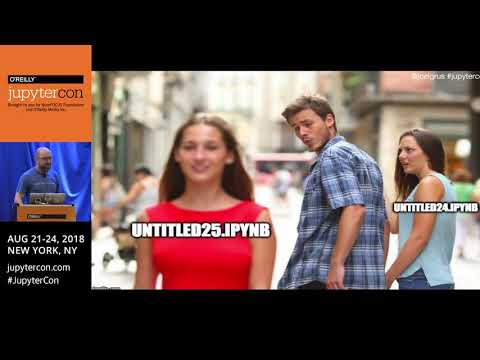
Joel Grus's JupyterCon talk explaining why he dislikes Jupyter notebooks. He covers hidden state, trouble with reproducibility and testing, and how notebooks frustrate teaching. He shows his preferred workflow and what Jupyter could change.

charstarleneTV · 2 HN recommenders
A two-minute satirical short film in which a woman leaves her phone at home and notices how everyone around her is absorbed in their screens. It became a viral comment on phone distraction and social disconnection.

laowhy86 · 6 HN recommenders
A 2020 video by laowhy86 arguing that the coronavirus did not originate outside China, pointing to evidence about the Wuhan institute and a possible patient zero. It cites sources in the description.

The Thought Emporium · 8 HN recommenders
The Thought Emporium's host describes making and taking a DIY gene therapy to treat his own lactose intolerance. It uses an AAV virus to deliver DNA coding for the lactose-digesting enzyme, made with biohacker Gabriel Licina's help.

Coffeezilla · 2 HN recommenders
Coffeezilla recounts being offered a $20k bounty to expose a Counter-Strike skin casino, then investigates and finds a different story. It is the first episode of a series on CS skin gambling.

The Thought Emporium · 2 HN recommenders
The Thought Emporium shows how they engineered a yeast strain to produce real spider silk, after more than two years of lab work and many failures. The video explains the genetic engineering process behind it.
JAMIEvstheVOID · 2 HN recommenders
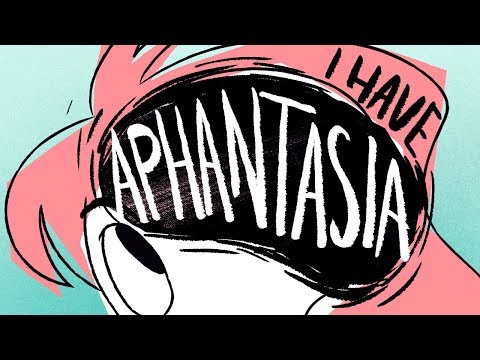
An artist describes discovering she has aphantasia, the inability to form mental images, and how it affects her work. She asks viewers about their own visualization.

KRAZAM · 2 HN recommenders
A short KRAZAM comedy sketch satirizing corporate tech life, where a worker reckons with having delivered value at the cost of his soul, complete with Slack chimes.

Jeremy Howard · 4 HN recommenders
Jeremy Howard defends Jupyter notebooks as a serious development environment, especially when paired with nbdev. He responds directly to Joel Grus's talk about why he dislikes notebooks, and contrasts REPL-style and notebook-style work.

Bisqwit · 3 HN recommenders
Bisqwit writes a NES emulator in C++ in about 15 minutes of tool-assisted, sped-up coding, narrated with captions. It shows an accurate emulator built with a compile-time generated 6502 instruction table. Part 2 covers compiling and running it.

Useless Duck Company · 3 HN recommenders
A maker builds a talking banana that reads YouTube and Twitch comments aloud on stream, then fights viewers who abuse it with profanity. He ends up building a pronunciation-based filter to catch bad words.

Technology Connections · 10 HN recommenders
Technology Connections explains dishwasher detergent use, arguing people use too much and that powder beats pods and gels. It follows an earlier dishwasher video and covers enzymes, bleach, rinse aids and when salt is needed.

Sabine Hossenfelder · 5 HN recommenders
Sabine Hossenfelder explains how the greenhouse effect actually works, given that infrared is mostly absorbed low in the atmosphere already. She walks through why more CO2 still warms the surface.

Inigo Quilez · 7 HN recommenders
Inigo Quilez live-paints a mountain landscape using only math in a shader, building up from a basic polynomial noise surface through fractal terrain, lighting and atmosphere. The code runs in real time on Shadertoy so viewers can edit it as they follow along.

Tom Scott · 9 HN recommenders
Tom Scott investigates the claim that the microwave was invented to heat hamsters, and interviews James Lovelock about freezing and microwave-thawing hamsters in the 1950s. It traces early magnetron uses beyond radar.

Sabine Hossenfelder · 2 HN recommenders
Sabine Hossenfelder explains that waste heat from ever-growing energy use could eventually boil the oceans in a few centuries, whatever the energy source. She discusses proposed ways to cool the planet.

Benn Jordan · 2 HN recommenders
Benn Jordan's video about storing a PNG image in a living bird, a starling that learns to reproduce encoded sounds. It mixes ornithology, audio engineering, and data encoding.

Stuff Made Here · 3 HN recommenders
Stuff Made Here builds a handwriting robot and sends its output to a handwriting expert to see whether it can pass as forgery. It walks through the engineering trials and errors along the way.

GDC Festival of Gaming · 4 HN recommenders
Bungie's David Aldridge explains the networking programming behind Halo: Reach in a 2011 GDC session. It covers how gameplay stays in sync online, including forecasting and state reconciliation.

2swap · 3 HN recommenders
2swap explains how he solved the Klotski sliding-block puzzle by mapping its full state space as a graph and visualizing it. The video includes footage of the Guinness world-record solve and links to an interactive graph.

Sabine Hossenfelder · 2 HN recommenders
Sabine Hossenfelder explains why she thinks faster-than-light travel may not be ruled out. She argues that the standard objections from special relativity are inconclusive.

Tom Scott · 4 HN recommenders
Tom Scott visits a rotating house near San Diego and explains how electricity, gas and water keep working on the rotating part. It includes a 3D render of the utility connection system.
Veritasium · 3 HN recommenders
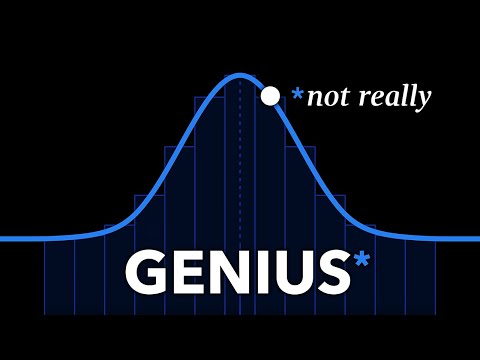
Veritasium takes an IQ test and examines what IQ measures, its history including military use and eugenics, its controversies, and how it correlates with life outcomes. Experts including Cecil Reynolds and Stuart Ritchie contribute.