What Happened Before History? Human Origins
Kurzgesagt – In a Nutshell · 2 HN recommenders
Kurzgesagt's animated overview of human origins and the vast prehistory before recorded history. It covers how modern humans emerged and spread.
THE ARCHIVE · EVERY DISCOVERY
3,553 videos with summaries and linked Hacker News recommendations, arranged by title.
Kurzgesagt – In a Nutshell · 2 HN recommenders
Kurzgesagt's animated overview of human origins and the vast prehistory before recorded history. It covers how modern humans emerged and spread.

CGP Grey · 11 HN recommenders
CGP Grey's video "Humans Need Not Apply" argues that automation will make a large part of the workforce economically obsolete, much as engines did for horses. It surveys robots and software replacing both physical and mental labor.
PBS Space Time · 2 HN recommenders
PBS Space Time explains Roger Penrose's conformal cyclic cosmology, in which the far future of our universe becomes the big bang of the next. It explores what could come after the universe ends.
PBS Space Time · 3 HN recommenders
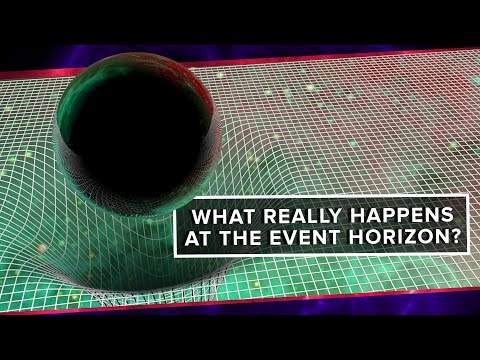
PBS Space Time explains what happens as you approach and cross a black hole's event horizon, using Penrose diagrams and light cones as the tool for understanding spacetime there.

The Royal Institution · 2 HN recommenders
Matt Parker's Royal Institution talk based on his book Humble Pi, covering everyday mathematical mistakes and spurious patterns that went wrong in engineering and software. It mixes stand-up comedy with stories of coincidence and error.

GOTO Conferences · 3 HN recommenders
Matt Ranney of Uber talks at GOTO Chicago 2016 about what Uber learned from growing past 1,000 production microservices. He covers regrets, sprawl and organizational effects.

Institute for Advanced Study · 3 HN recommenders
Vladimir Voevodsky's IAS lecture starts from Godel's second incompleteness theorem to explore whether first-order arithmetic could be inconsistent. It motivates his vision of univalent foundations and computer-checked proofs.

Veritasium · 2 HN recommenders
Veritasium shows what the world looks like through a UV camera. It covers how pigments absorb UV, how fluorescence works, and how UV imaging reveals sunscreen effectiveness and skin damage.

xkcd's What If? · 2 HN recommenders
Randall Munroe of xkcd answers what would happen if you swam in a spent nuclear fuel pool, and how much radiation you would receive at the surface versus at depth.

Practical Engineering · 6 HN recommenders
Practical Engineering explains what a black start is: restarting a power grid after total collapse. It shows why most plants need outside power to start and why rebuilding a synchronized grid is delicate and high-stakes.

Ji Lee · 2 HN recommenders
Street interviews of over 50 passersby in Times Square, asked what a browser is. Many answers show people confuse browsers with search engines or the internet.
Anders Puck Nielsen · 2 HN recommenders
Anders Puck Nielsen clears up common misunderstandings about what legally counts as genocide, then compares the situation in Gaza with the genocide case against Putin. The chapters cover the definition, individual intent, and the two case comparisons.

nickkallen1 · 3 HN recommenders
The Plasticity creator explains what a geometry kernel is and compares commercial options C3D, ACIS, and Parasolid, describing his months of research and why he chose as he did.

paul wheaton · 2 HN recommenders
A two-minute explanation of what a rocket mass heater is, starting from how a conventional wood stove works and why creosote and chimney fires occur. It shows how burning hot and storing the heat in thermal mass makes for an efficient heater.
Scott Manley · 2 HN recommenders
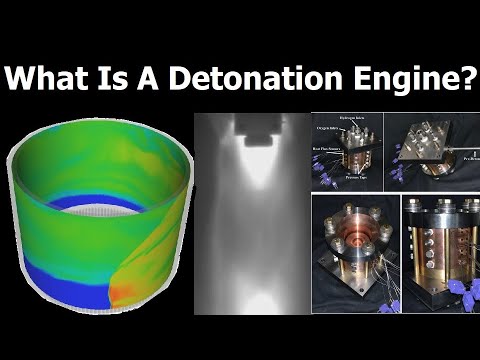
Scott Manley explains rotating detonation engines, how they differ from pulsed detonation engines, and why thermodynamics predicts they beat traditional jet and rocket engines.

WeUseCoins · 2 HN recommenders
A two-minute animated introduction to Bitcoin from 2011, explaining it as a peer-to-peer digital currency. It was widely shared in Bitcoin's early days as the standard newcomer explainer.

Practical Engineering · 2 HN recommenders
Practical Engineering gives a short introduction to concrete, covering the difference between concrete and cement, the ingredients, and reinforcement. It includes a hydraulic press demonstration of compressive strength.

LuceneSolrRevolution · 3 HN recommenders
Elasticsearch engineer and Lucene committer Adrien Grand explains the design decisions inside a Lucene index and what problems it can and cannot solve. The talk goes into how Lucene stores data for fast search and analytics.

Louis Rossmann · 4 HN recommenders
Louis Rossmann gives a basic, non-technical introduction to right to repair legislation for people new to the issue.
TEDx Talks · 2 HN recommenders
Prof. Eran Segal's TEDx talk on research showing that people's blood sugar responses to identical foods vary widely. It describes an algorithm that predicts individual responses and why one best diet for everyone does not exist.

Stated Clearly · 2 HN recommenders
Stated Clearly explains the RNA world hypothesis, which resolves the chicken-or-egg problem of genes versus enzymes by proposing that RNA once did both jobs. It outlines how evolution could begin with RNA chains alone.

Physics Explained · 2 HN recommenders
A detailed 40-minute explanation of the ultraviolet catastrophe, covering Rayleigh and Jeans' classical treatment of blackbody radiation and Planck's quantum hypothesis. It follows the Eisberg and Resnick textbook treatment.

Bloomberg Podcasts · 3 HN recommenders
An Odd Lots podcast episode on why converting empty office buildings into apartments is hard. A managing director at Vanbarton Group walks through the zoning, financing and construction obstacles, mostly in New York.

Sara Forsberg · 6 HN recommenders
Finnish YouTuber Saara improvises gibberish that mimics how various languages sound to people who do not speak them. The sentences are mostly made up, and the clip went viral.

Rick Beato · 3 HN recommenders
Rick Beato analyzes the music and production of Max Martin through Ariana Grande's Into You, breaking down its layering and songwriting craft.

PyCon AU · 3 HN recommenders
Daniele Procida's PyCon AU 2017 talk presents a system that divides documentation into four kinds, usually drawn as four quadrants. He explains why mixing them makes docs poor and how separating them improves writing.

Polylog · 4 HN recommenders
Polylog explains how algorithms can be turned into circuits and encoded as satisfiability problems, which lets you effectively run them backwards. It uses this to motivate breaking RSA, general reductions to SAT, and what P vs NP is really asking.

Oh The Urbanity! · 4 HN recommenders
Oh The Urbanity! argues that most city dwellers live in dense residential neighbourhoods outside downtown, which can be calm and peaceful. It draws on older, denser parts of Toronto and Montreal.

Oh The Urbanity! · 4 HN recommenders
Explains induced demand beyond roads, showing that it applies to transit, walking and cycling infrastructure too but with different consequences. It corrects common misunderstandings of the concept.

American Enterprise Institute · 2 HN recommenders
Megan McArdle's AEI Vision Talk 'Capital and Poverty' argues that social and financial capital work differently in low-income communities, and that this explains barriers to reaching the middle class.

Practical Engineering · 2 HN recommenders
Practical Engineering explains why San Francisco's Millennium Tower is sinking and tilting, covering how geology and foundation design (friction piles in the Colma Formation) affect skyscrapers. It also covers the fix being attempted.

Practical Engineering · 6 HN recommenders
Practical Engineering's explanation of the February 2021 Texas winter storm and the resulting power grid outage. It lays out the facts about ERCOT, the grid's isolation, and how generation across fuel types failed in the cold.

Ryan George · 2 HN recommenders
A Ryan George comedy sketch about the absurdities of shopping on Amazon, including nonsense brand names, fake reviews and scammy sellers.

JSConf · 16 HN recommenders
Philip Roberts explains the JavaScript event loop, call stack, callbacks and asynchronous behavior with live visualizations using a tool he built. It demystifies terms like non-blocking and single-threaded.

VladCantSleep · 2 HN recommenders
A hidden-camera social experiment in a park where three people try to steal a bike in the open: a white teenager, a black teenager and a young woman. It records how bystanders react to each.

Altium · 5 HN recommenders
Rick Hartley's AltiumLive keynote on differential pairs in PC boards. He argues the rules from cables and twisted pairs do not carry over, and covers which pair geometry gives the best impedance control, the right spacing, routing practice and how much skew is acceptable.

Zig SHOWTIME · 3 HN recommenders
A Zig SHOWTIME talk by Benjamin Feng on what a memory allocator is, followed by an interview. It covers allocation strategies and different allocator types in Zig.

The Julia Programming Language · 2 HN recommenders
Julia co-creator Jeff Bezanson candidly lists fundamental problems with the language at JuliaCon 2019, including modularity, types and compiler latency, and how they might be solved.

People Make Games · 3 HN recommenders
People Make Games interviewed 16 current and former Valve employees to examine how the company's no-bosses, no-titles structure works in practice, and where it falls short.

Ryan Long · 2 HN recommenders
A short comedy skit by Ryan Long satirizing how woke activists and racists end up agreeing on many things.

Veritasium · 3 HN recommenders
Veritasium asks people where a tree's mass comes from, then explains that most of a dry tree's mass originates from carbon dioxide in the air. It combines street interviews with a short explanation of photosynthesis.

Talks at Google · 2 HN recommenders
Clayton Christensen speaks at Google on where growth comes from, covering disruption, market-creating versus efficiency innovation, and jobs to be done. He also touches on measuring your life.
TEDx Talks · 5 HN recommenders
Sociologist and comedian Harald Eia argues in a TEDxOslo talk that Nordic social democracies produce more rich people per capita than the US or UK. He credits high taxes, welfare and strong unions for creating a safety net that enables risk taking.

Asianometry · 2 HN recommenders
Asianometry explains that the worst of the 2021-22 chip shortage sits in trailing-edge semiconductors, not the leading-edge chips usually covered. It covers why those older-node fabs are so hard to expand and fix.

The Real News Network · 2 HN recommenders
The Real News Network interview between Aaron Mate and Guardian reporter Luke Harding about Russiagate and Harding's book on alleged Russian collusion.

Adam Neely · 3 HN recommenders
Musician Adam Neely examines whether certain keys sound sadder than others, looking at the history of tuning systems and temperaments and at how instrument timbre shapes the emotional character we hear. It draws on historical aesthetics writing and audio examples.

3Blue1Brown · 4 HN recommenders
An older 3Blue1Brown video on why topology matters, built around the inscribed rectangle problem. It walks through how tori and Mobius strips appear in the solution. The channel later replaced it with an updated version.

LeadDev · 4 HN recommenders
Nickolas Means recounts the 1979 Three Mile Island accident minute by minute, from the control rod insertion to the operator's decision to switch off emergency cooling. He argues that finding systemic causes is more useful than blaming individuals.

BicycleDutch · 3 HN recommenders
A short BicycleDutch episode showing how people with disabilities use Dutch cycle tracks on hand-cycles, tricycles and mobility scooters.

Kurzgesagt – In a Nutshell · 3 HN recommenders
Kurzgesagt examines who is responsible for climate change, comparing historical, current and per-capita emissions by country. It argues that individual footprints are a distraction from larger responsibility.

ESOTERICA · 3 HN recommenders
An ESOTERICA episode tracing Yahweh from a warrior-storm god near Mt Seir to the god of the Israelites in the Judean highlands. It examines how Yahwism absorbed and contended with Canaanite religion.

Official Wakaliwood · 2 HN recommenders
Who Killed Captain Alex is Uganda's first action movie, made for under $200 by Nabwana IGG in Wakaliga. This version has English subtitles and a video joker (VJ Emmie) providing running commentary.

Tom Scott plus · 2 HN recommenders
Tom Scott races a London black-cab driver who has memorized The Knowledge against a phone GPS across the city, comparing local expertise to navigation software.

Climate Town · 3 HN recommenders
A Climate Town episode on who uses America's water, particularly Western water. It looks at agriculture such as alfalfa and animal feed, and at water-rights rules that discourage conservation.

PolyMatter · 3 HN recommenders
PolyMatter explains China's housing bubble and why around 50 million homes sit empty. It covers cultural and economic reasons behind the overbuilding and the government's bind.

Evan Carmichael · 2 HN recommenders
A short clip of Steve Jobs arguing that the best people are self-managing and that professional managers who cannot do the work add little. He says leadership is about a shared vision.

Rick Beato · 4 HN recommenders
Rick Beato argues that adults cannot develop true perfect pitch, which he ties to critical-period brain plasticity and language acquisition. He says it can only be developed in young children, and discusses the research behind this.
Kurzgesagt – In a Nutshell · 4 HN recommenders
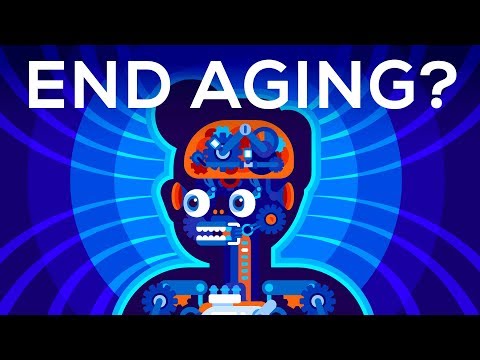
Kurzgesagt's short animated video asks whether humanity should try to end aging, and argues the case for curing age-related disease. It is part one of a pair, with a second part by CGP Grey.

David Heinemeier Hansson · 3 HN recommenders
David Heinemeier Hansson explains what he learned about indoor air quality after his new house made his family sick. He covers CO2, VOCs, off-gassing, HVAC and ventilation, and cognitive effects, presented at a Basecamp meetup.

Kurzgesagt – In a Nutshell · 3 HN recommenders
A short Kurzgesagt animation explaining the Great Filter, the idea that finding alien life might be bad news because it implies something usually destroys civilizations. It connects the concept to the Fermi paradox.